
Foundation Repair in East Kildonan
A district that quadrupled in size after the war, on ground that runs down to the Red.
East Kildonan runs from the Red River east to the Canadian Pacific Marconi tracks, covering just under thirteen square kilometres of mostly post-war housing. Winnipeg Foundation Experts works throughout the district, and the pattern of what we find here is unusually consistent.
Built in One Push
The district’s growth is compressed into a couple of decades. Census counts put it at roughly 8,400 people in 1941 and past 30,000 by 1971, with a housing boom through the mid-1950s that brought in roads, sewers and schools alongside the houses.
East Kildonan was incorporated as a city in its own right on 1 July 1957 with around 20,000 residents, and amalgamated into Winnipeg in 1972. The opening of the Disraeli Freeway on 20 October 1959, connecting Henderson Highway to downtown, accelerated the build-out further.
What that means for foundations is uniformity of vintage. A great many houses here were built to the same standard within a few years of each other, which is why we tend to see the same drainage problems arriving across a neighbourhood in the same decade rather than scattered randomly.
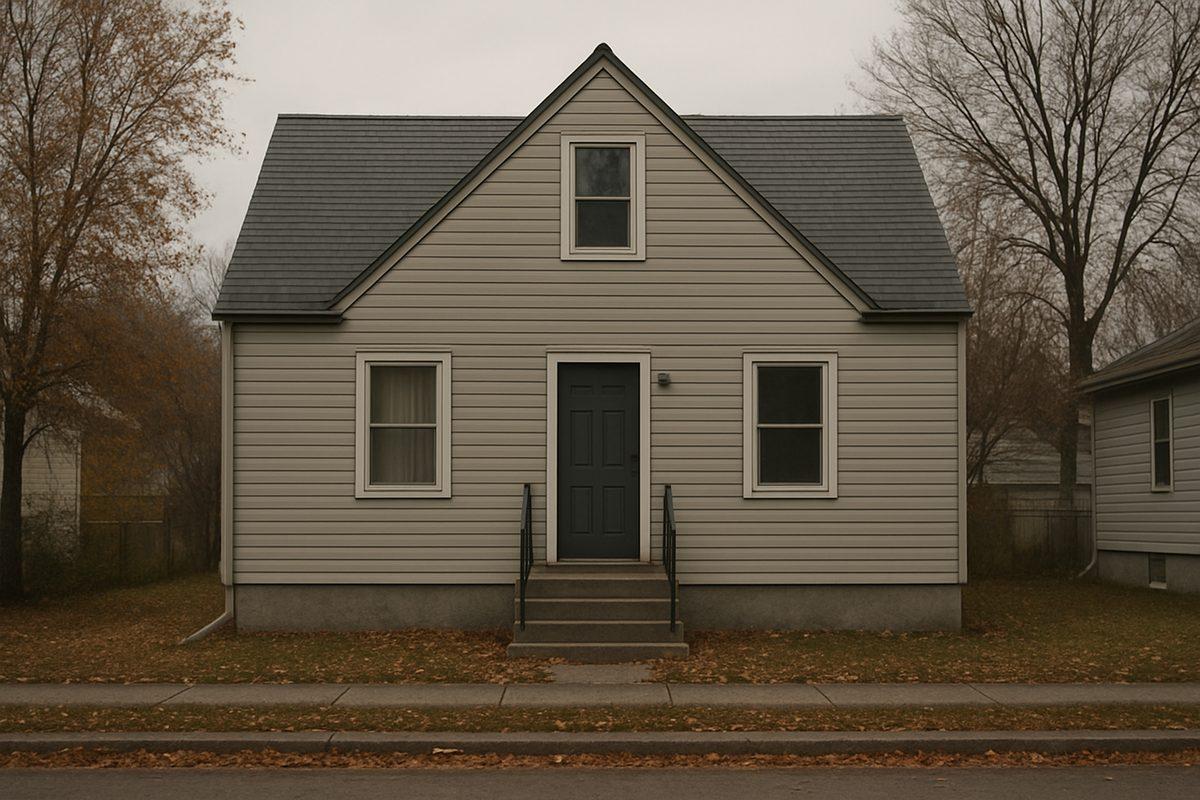
The housing itself is a mix of bungalows, split-levels, two-storeys and bi-levels, reflecting mid-to-late twentieth century development.
The River Boundary
The Red forms the western edge of the district, and the ground on that side behaves differently from the interior. Riverbank property carries a higher water table, so drainage systems work harder and stay wetter for longer after a spring melt.
River valley slopes also move. It is slow, and it is not a concern on most properties, but on a lot close to the bank it belongs in the assessment rather than being assumed away.
Original Drainage Reaching Its Limit
The weeping tile that went in with the 1950s boom is now around seventy years old. Clay tile from that period silts up, shifts and collapses, and when it does the water it used to carry goes to the foundation wall instead.
The failure is quiet. A sump pit that stays dry while the basement takes water is the classic sign, because the tile is no longer delivering anything to the pit. We check this specifically on houses of this vintage.
Scottish Origins
The Kildonan name dates to 1817, after the Strath of Kildonan in Sutherland, Scotland, following Lord Selkirk’s Red River Settlement of 1812. The Municipality of Kildonan was established in 1876 and split into East and West along the river in 1914, with North Kildonan separating in 1925.
Streetcar service reached the area in 1903, which is when it began shifting from agricultural land toward the residential suburb it became.
We work across Munroe, Morse Place, Rossmere, Fraser’s Grove and Valley Gardens. The assessment is free. Common work here: weeping tile installation, sump pump installation, and bowing wall repair on block foundations under lateral load.
Neighbourhoods We Serve in East Kildonan
- Munroe East
- Munroe West
- Morse Place
- Rossmere
- Fraser's Grove
- Valley Gardens
- Eaglemere
- Kildonan Drive
Our Services in East Kildonan
- Foundation Inspection in East Kildonan
- Foundation Crack Repair in East Kildonan
- Basement Waterproofing in East Kildonan
- Sump Pump Installation in East Kildonan
- Sump Pump Repair & Replacement in East Kildonan
- Weeping Tile Installation in East Kildonan
- Egress Window Installation in East Kildonan
- Foundation Piling & Underpinning in East Kildonan
- Bowing & Bulging Wall Repair in East Kildonan
- House Leveling & Settlement in East Kildonan
- Wet Basement & Leak Repair in East Kildonan
- Parging & Foundation Resurfacing in East Kildonan
- Concrete Repair in East Kildonan
- Window Wells in East Kildonan
- Crawl Space Repair in East Kildonan
- Basement Lowering in East Kildonan
Foundation Questions from East Kildonan Homeowners
Why do so many East Kildonan houses have similar foundation issues?
Because a large share of them were built in the same short window. The district went through a housing boom in the mid-1950s that brought roads, sewers and schools in alongside the houses, and the district grew more than threefold between the 1941 and 1971 censuses. Houses built to the same standard at the same time tend to reach the end of that standard's service life together.
Does being close to the Red River bank matter?
It does. East Kildonan is bounded on the west by the Red, and property near a riverbank deals with two things other lots do not have, namely a higher water table and the slow movement that river valley slopes are prone to. Both are worth accounting for when assessing a foundation on that side of the district.
My 1950s bungalow has never had foundation work. Is that unusual?
Not at all, and it is not necessarily a problem. What it does mean is that the original drainage is around seventy years old. Weeping tile from that era is often clay tile that has silted up or collapsed, and it usually fails quietly rather than announcing itself, so it is worth knowing the condition before a wet spring finds it for you.
Is Kildonan Park in East Kildonan?
No, it is in West Kildonan across the river, which is a common mix-up. East Kildonan's own green space includes the neighbourhoods along Kildonan Drive on the river side.
Serving East Kildonan and Nearby
Foundation repair and basement waterproofing across East Kildonan. Book a free assessment and get a written scope before any work starts.