
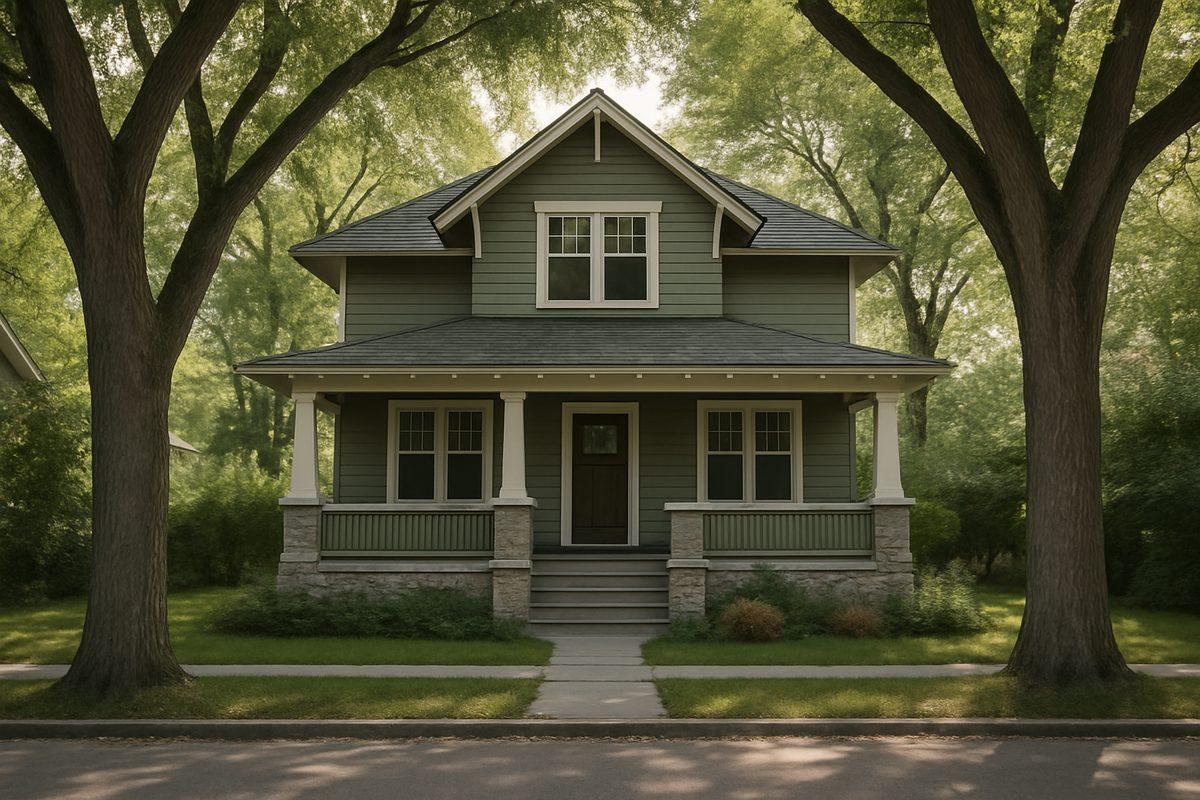
Foundation Repair in River Heights
Character homes from 1905 onward, under the densest mature elm canopy in the city.
River Heights was one of Winnipeg’s first planned residential suburbs, and the foundations here are older than almost anything else Winnipeg Foundation Experts works on. Lot sales began in the summer of 1904, and the area between Wellington Crescent and Corydon Avenue was subdivided between 1905 and 1912.
Streetcar-Era Construction
The Academy Road streetcar line made the district possible, and the housing followed the tracks. What went up were large Craftsman, Tudor Revival and Colonial Revival homes on generous lots, built for Winnipeg’s business community of the day.
What sits under a house of that period is either rubble stone or the earliest generation of poured concrete, carrying balloon framing above it. Ceiling height in those basements runs to roughly six or seven feet, and the drainage they were built with was clay tile.
That combination behaves nothing like a post-war foundation. Stone walls tolerate movement that would be serious in poured concrete, and they fail in a different way when they do fail, usually through mortar washing out rather than through cracking.
A second wave between the 1920s and 1950s filled the streets south of Grant Avenue with smaller houses, storey-and-a-half and single-storey, on block and poured footings.
Crescentwood and Wellington Crescent
Crescentwood, established in 1904 by developer C. H. Enderton, sits adjacent and shares the era and the construction character. It runs between Academy Road, the Assiniboine, Corydon Avenue and Cambridge Street.
Wellington Crescent follows the curve of the Assiniboine along the northern edge of the district, on the line of what was historically a trail following the river’s bends. Property near the river deals with a different water table than land further south.
The Elm Canopy Is a Foundation Factor
Winnipeg holds the largest mature urban elm forest in North America, roughly 160,000 trees, and elm and ash together make up more than half the public tree inventory. River Heights is one of the most heavily canopied parts of the city.
That canopy is the district’s best feature and it is also a genuine variable in what the soil under these houses does. Across a dry summer a full-grown elm pulls an enormous quantity of moisture from the soil it stands in, and clay contracts as it gives that moisture up. A house with large trees on one side and none on the other can experience uneven moisture and therefore uneven movement.
The same root systems are a persistent problem for the old clay tile drain lines these houses were built with.
Working on Older Foundations
The right approach on a 1910 stone foundation is not the right approach on a 1960 poured wall. We assess what you actually have before recommending anything, and on this housing stock that assessment matters more than usual.
The assessment is free and you get the findings either way. Common work here: foundation crack repair, weeping tile installation where the original clay tile has failed, and basement lowering for the low basements typical of the era.
Neighbourhoods We Serve in River Heights
- Crescentwood
- Wellington Crescent
- Grant Park
- Academy Road
- Corydon
Our Services in River Heights
- Foundation Inspection in River Heights
- Foundation Crack Repair in River Heights
- Basement Waterproofing in River Heights
- Sump Pump Installation in River Heights
- Sump Pump Repair & Replacement in River Heights
- Weeping Tile Installation in River Heights
- Egress Window Installation in River Heights
- Foundation Piling & Underpinning in River Heights
- Bowing & Bulging Wall Repair in River Heights
- House Leveling & Settlement in River Heights
- Wet Basement & Leak Repair in River Heights
- Parging & Foundation Resurfacing in River Heights
- Concrete Repair in River Heights
- Window Wells in River Heights
- Crawl Space Repair in River Heights
- Basement Lowering in River Heights
Foundation Questions from River Heights Homeowners
What kind of foundations do River Heights character homes have?
The 1905 to 1930 housing here generally stands on rubble stone, or on the earliest poured concrete, under balloon framing, with basements of only about six or seven feet. Those basements were connected to clay tile drains, which in most cases have long since silted up or collapsed. It is a different structure from anything built after the war and it needs a different approach.
Do the big elms actually affect my foundation?
Yes, and this district is more exposed to it than most. Winnipeg holds the largest mature urban elm forest in North America and these streets are among the most heavily shaded in it. Every one of those trees is drawing moisture from the clay all summer, and clay that dries out contracts away from the footings it was supporting.
Can I repair a rubble-stone foundation, or does it need replacing?
Repair is usually possible and replacement is rarely the first answer. Stone foundations move differently from poured concrete and they tolerate a certain amount of movement that would be alarming in a modern wall. What they do not tolerate is water washing out the mortar between stones, so the drainage matters more here than almost anywhere.
My basement is only six and a half feet high. Are my options limited?
For repair work, no. For finishing the space, that height is the constraint, and it is the usual reason people in this area ask about basement lowering. Whether that is practical depends on where your footings sit, which we can measure.
Serving River Heights and Nearby
Foundation repair and basement waterproofing across River Heights. Book a free assessment and get a written scope before any work starts.