
Foundation Repair in St. Boniface
River-lot land at the Seine and Red confluence, with foundations spanning a century of build eras.
St. Boniface has the longest continuous settlement history of anywhere Winnipeg Foundation Experts works, and its foundations reflect that. A district established in 1818 and built out in waves through to the 1990s contains almost every construction era Winnipeg has produced, sometimes within a few blocks of each other.
The Land Under It
The district sits at the confluence of the Seine and Red rivers, on the flattest terrain in North America. The Red River valley falls roughly six inches per mile, which means water does not run off, it sits and soaks.
Underneath is the silt and heavy plastic clay left by glacial Lake Agassiz, the material locally called Manitoba gumbo. It takes on water reluctantly and gives it up reluctantly, and it changes volume as it does either. That is the mechanism behind most of the foundation work in this part of the city.
Proximity to the two rivers raises the water table on much of the district’s western side, which puts more sustained load on drainage systems than in areas further out.
Two Very Different Build Eras
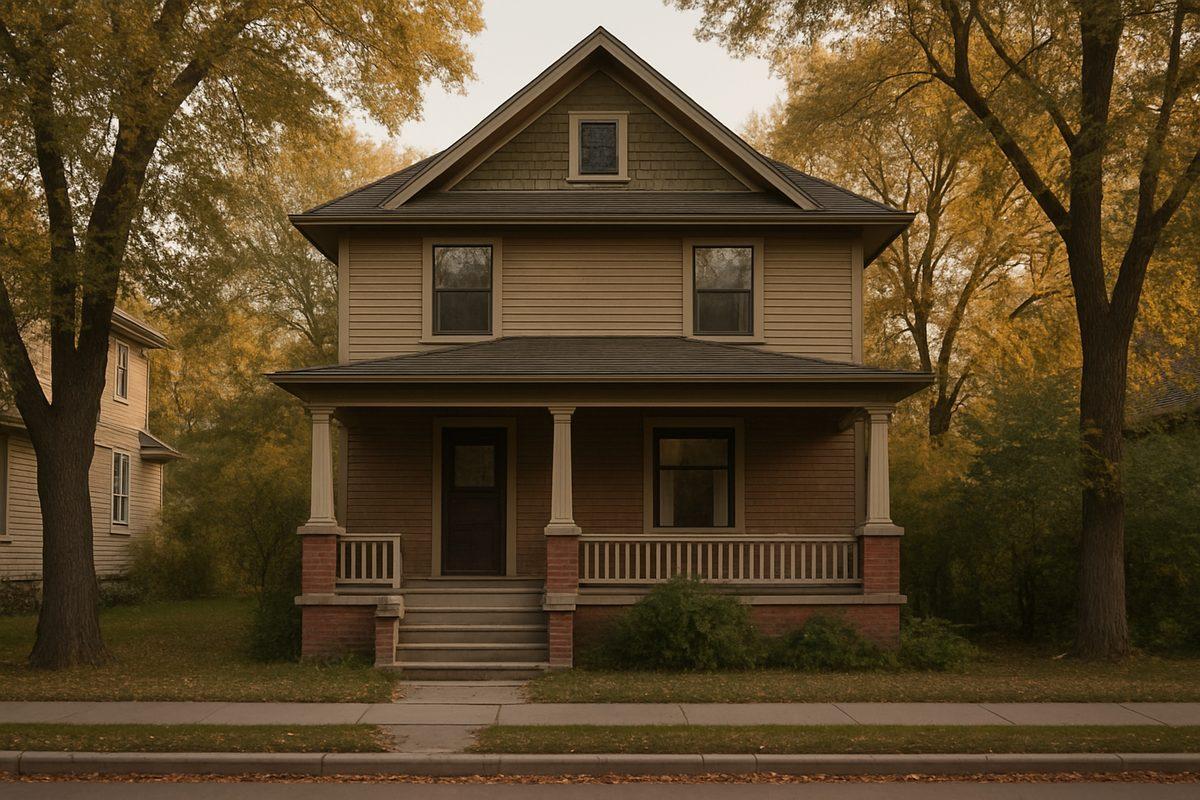
Norwood was subdivided into building lots before 1914 by the Norwood Improvement Company and built out in the years around it. These are the oldest residential foundations in the area. Much of the housing through central St. Boniface followed between the 1920s and 1940s.
Windsor Park is another matter entirely. Master-planned by Green Blankstein Russell and Associates with development starting in 1954, it was the first master-planned community in Winnipeg and the largest development of its kind in western Canada at the time. Ladco committed to 3,100 homes under a contract signed in January 1956, and the first ribbon-cutting came that September.
The practical consequence is uniformity. Windsor Park bungalows were built to a consistent specification in a short window, so when a foundation issue turns up in one, it is worth checking the same detail on the others. Norwood is the opposite, with each house on its own.
The River-Lot Pattern
Land here follows the French seigneurial river-lot system rather than the English township grid, with long narrow lots running perpendicular to the river. The Dominion Lands Survey formally mapped them in 1874 under Deputy Surveyors Duncan Sinclair and George McPhillips.
That geometry still shapes drainage. Narrow side yards mean less room to establish grade away from a wall, and what a neighbour does with their downspouts is more likely to matter to you than on a wide lot.
Flood Years and Groundwater
The Red has flooded significantly in 1950, 1997, 2009 and 2011, and the 1826 event is still the benchmark. Flood protection has changed what reaches the streets, but it has not changed what happens underground: a high-water year saturates clay across the district and loads basement walls that never see standing water.
We work throughout Norwood, Windsor Park, Southdale, Archwood and the rest of the district, on everything from pre-1914 stone-and-block foundations to 1950s poured walls. The assessment is free and you get the findings either way. Common work here: foundation crack repair, basement waterproofing, and weeping tile installation where the original drainage has reached the end of its life.
Neighbourhoods We Serve in St. Boniface
- Norwood East
- Norwood West
- Central St. Boniface
- Windsor Park
- Southdale
- Archwood
- Island Lakes
- Niakwa Park
Our Services in St. Boniface
- Foundation Inspection in St. Boniface
- Foundation Crack Repair in St. Boniface
- Basement Waterproofing in St. Boniface
- Sump Pump Installation in St. Boniface
- Sump Pump Repair & Replacement in St. Boniface
- Weeping Tile Installation in St. Boniface
- Egress Window Installation in St. Boniface
- Foundation Piling & Underpinning in St. Boniface
- Bowing & Bulging Wall Repair in St. Boniface
- House Leveling & Settlement in St. Boniface
- Wet Basement & Leak Repair in St. Boniface
- Parging & Foundation Resurfacing in St. Boniface
- Concrete Repair in St. Boniface
- Window Wells in St. Boniface
- Crawl Space Repair in St. Boniface
- Basement Lowering in St. Boniface
Foundation Questions from St. Boniface Homeowners
Why do Norwood foundations behave differently from Windsor Park ones?
They are separated by roughly forty years of construction practice. Norwood was subdivided and built before 1914, so its foundations are the oldest residential stock in the area and often predate anything resembling modern drainage. Windsor Park was master-planned from 1954, and those 1950s and 1960s bungalows were built to a consistent standard across the whole development. The failure patterns we see in each are genuinely different.
Does being at the Seine and Red confluence affect my foundation?
It affects the water table and the drainage. St. Boniface sits where the Seine River joins the Red, and property near either watercourse deals with a higher water table than land further from them. That means more sustained moisture against foundations and more work for weeping tile and sump pumps.
My lot is long and narrow. Does that matter for drainage?
It can. The river-lot survey pattern here produced deep, narrow properties running back from the river rather than the square blocks of an English township survey. Long narrow lots concentrate the drainage question along a single side yard, and neighbouring downspouts and grades often affect each other more directly than on a wider lot.
Is flooding a real foundation concern here?
Red River flooding is part of this area's history, with significant events in 1950, 1997, 2009 and 2011. Most properties are protected, but flood years raise groundwater across the district well beyond the areas that actually see surface water, and saturated clay pushes on basement walls whether or not the river reaches your street.
Serving St. Boniface and Nearby
Foundation repair and basement waterproofing across St. Boniface. Book a free assessment and get a written scope before any work starts.